 Bellingham Siding
 Storm Damage Roof Repair for the York Neighborhood
York is one of the older, tree-shaded pockets of Bellingham, and that combination of mature trees and proximity to the water means roofs here take a specific kind of beating. It's rarely one catastrophic event. More often it's a winter of southwest gales, a few inches of wind-driven rain finding their way under a lifted shingle, and a summer of shade-grown moss quietly working into the granules. By the time a homeowner notices a stain on the ceiling, the roof has usually been compromised for months. We work on roofs in this part of Bellingham regularly, and this page walks through what storm damage actually looks like here, what a correct repair involves, and how we handle the job from first call to final inspection.
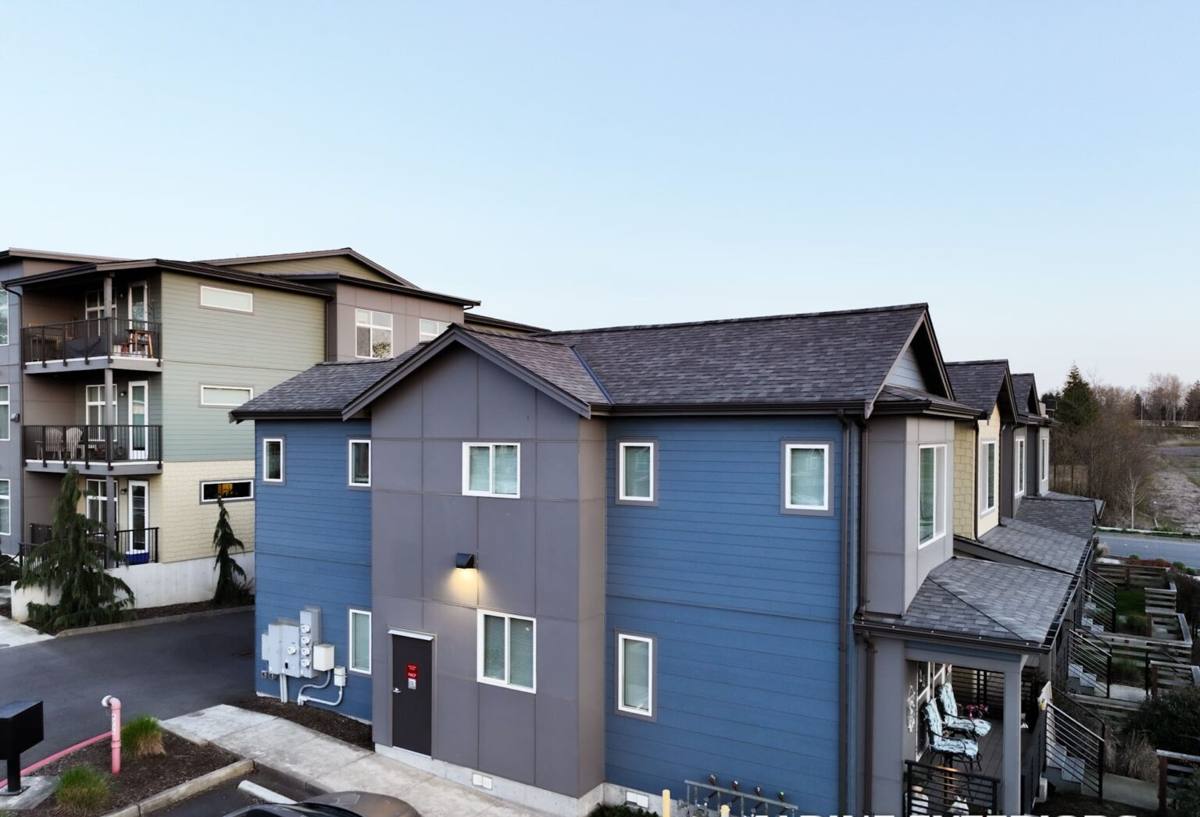
What Bellingham Storms Actually Do to a Roof
Whatcom County doesn't usually get hail or tornado-driven damage the way some regions do. Our storm damage is slower and more mechanical, which is exactly why it gets missed.
Wind and Uplift
Winter storms off the Strait of Georgia and Puget Sound push sustained wind at roofs from the southwest, and gusts don't need to be extreme to do damage. Repeated flexing loosens shingle tabs and nails long before a shingle actually blows off. A roof can look intact from the ground and still have a dozen tabs that lift under the next wind event.
Wind-Driven Rain and Flashing
Bellingham rain is rarely a straight-down soaking; it comes in at an angle, which pushes water into places a roof was never designed to shed it from that direction — under shingle edges, behind step flashing at chimneys and walls, and into valleys. Flashing failures are one of the most common storm-related leaks we find, and they're almost always invisible until the water has already made it into the attic or wall cavity.
Moss, Debris, and Long-Term Buildup
York's tree canopy is part of what makes the neighborhood pleasant to live in, but it also means constant leaf and needle drop, shaded roof sections that never fully dry out, and moss that gets a head start every fall. Moss doesn't just sit on top of shingles — it lifts them at the edges, holds moisture against the granule surface, and creates a dam that redirects rain sideways instead of down. A storm doesn't have to be severe to cause damage on a roof that's already been weakened by a season or two of moss growth.
Signs Your York Roof Has Storm Damage
Most storm damage doesn't announce itself with a hole in the roof. It shows up as smaller signals that are easy to write off as "just an old roof." Worth checking after any significant wind or rain event:
- Shingle tabs that look lifted, curled, or slightly out of line with their neighbors
- Granules collecting in gutters or at downspout outlets
- Soft, discolored, or sagging spots on ceilings, especially near exterior walls or chimneys
- Visible daylight or gaps around flashing at chimneys, skylights, or roof-to-wall joints
- Moss concentrated on the north or shaded side of the roof, especially near valleys
- A musty smell in the attic or upper closets after rain
- Gutters pulling away from the fascia or overflowing during moderate rain
Any one of these on its own might be minor. Two or three together, especially after a windy stretch, usually means water has already found a way in.
What a Correct Storm Repair Actually Involves
A lot of "storm repair" in this trade is really just a tube of sealant and a handful of nails over the spot someone can see from the ground. That approach hides a leak temporarily instead of fixing it, and it almost always fails again within a season or two.
Assessment Before Repair
A correct repair starts by getting on the roof, not just looking at it from the yard. That means checking the decking underneath damaged shingles for soft spots or rot, tracing water stains back to their actual entry point (which is often several feet from where the stain shows up inside), and inspecting flashing, valleys, and vent boots — not just the shingles themselves. Storm damage frequently affects the underlayment and decking even when the shingles look mostly fine from above.
Matching Materials and Techniques
Repairs should use compatible shingle profiles and, where possible, matching color and manufacturer so the patch doesn't stand out or create a seam that traps water differently than the surrounding roof. Nailing pattern, sealant type, and flashing overlap all matter — cutting corners on any of these is how a "repaired" roof ends up leaking again in the next storm.
Our Process for Storm Repairs in York
We keep the process straightforward because homeowners dealing with an active leak don't need extra complexity added on top of it.
- Inspection. We get on the roof and in the attic if accessible, and document what we find with photos.
- Honest assessment. We tell you plainly whether this is a targeted repair, a larger section replacement, or something that's better addressed as part of a future full re-roof — and why.
- Written scope and estimate. You get a clear description of the work and the cost before anything is scheduled, not a verbal ballpark.
- Repair. Decking, underlayment, flashing, and shingles are addressed as needed — not just the visible surface.
- Cleanup and walk-through. Debris and old materials are removed, and we walk the completed work with you before we consider the job done.
Repair vs. Full Replacement: What Actually Drives the Decision
Not every storm-damaged roof needs to come off. But sometimes a repair is the more expensive choice in the long run if the rest of the roof is near the end of its life. Here's how we think about it:
| Factor | Points Toward Repair | Points Toward Replacement |
|---|---|---|
| Roof age | Under 12-15 years | Approaching or past shingle warranty life |
| Extent of damage | Isolated to one section or slope | Spread across multiple slopes or the whole roof |
| Decking condition | Solid, no rot found | Soft or rotted decking discovered in more than one spot |
| Moss/algae history | Recently treated, minimal growth | Heavy, long-term moss with granule loss underneath |
| Shingle match availability | Matching shingles still available | Discontinued profile, patch would be visibly mismatched |
We'll walk you through where your roof lands on this list before recommending either option — the goal is a roof that holds up through the next few winters, not the most expensive fix available.
Insurance and Storm Claims
Many storm repairs in this area are at least partially covered by homeowners insurance, particularly when there's a documented wind event. We can provide the photo documentation and written scope your adjuster will want to see, but we're not a public adjuster and won't promise a specific claim outcome — that's between you and your insurer. What we will do is give you an honest, itemized assessment of the damage and the repair needed, so you're working from accurate information either way.
Why a Crew That Already Works York Matters
Every neighborhood in Bellingham has its own roofing quirks, and York's mix of mature tree cover, older roof lines, and exposure to wind off the water is its own combination. A crew that's already worked on roofs in this part of town knows which slopes tend to hold moss longest, which older roof styles have flashing details that need extra attention, and how local permitting and access work for the area. That familiarity means less time spent re-learning the neighborhood on your dime, and a repair that accounts for conditions specific to where you live rather than a generic approach.
Keeping the Repair From Becoming a Repeat Job
A good storm repair should hold up for years, not months — but a few habits on the homeowner's side make a real difference in a climate like this one:
- Have gutters and downspouts cleared before the fall rains start, so water isn't backing up under the roof edge
- Keep overhanging branches trimmed back to reduce shade, debris, and moss pressure on the roof surface
- Address moss early with proper treatment rather than letting it establish for multiple seasons
- Have the roof looked at after any unusually high-wind event, even if nothing looks obviously wrong
None of this replaces a proper inspection, but it does reduce how often you need one done urgently.
If you've got a roof in York showing any signs after a recent storm — or you just want an honest opinion before the next one hits — we're happy to take a look. The estimate is free, there's no pressure to move forward, and you'll get a straight answer about what your roof actually needs. Use the form below to get started.