 Bellingham Siding
 Roofing in Birch Bay Isn't the Same Job as Roofing Ten Miles Inland
Birch Bay sits right on the water, and that changes what a roof has to deal with year after year. Homes here take on salt-laden air off the bay, wind-driven rain that gets pushed sideways under standard flashing details, and a moss season that runs longer than most homeowners expect in Whatcom County. A shingle roof that would hold up fine in a dry inland neighborhood can show granule loss, soft valleys, and moss-driven decay years earlier when it's installed the same way on a home a few blocks from the water.
That's the core of what this page is about: asphalt shingle roofing done specifically for Birch Bay conditions, not a generic install that happens to be scheduled in a coastal zip code. We work throughout Bellingham and Whatcom County, and Birch Bay is one of the areas where we adjust our approach — materials, fastening, ventilation, and flashing detail — because the climate demands it.
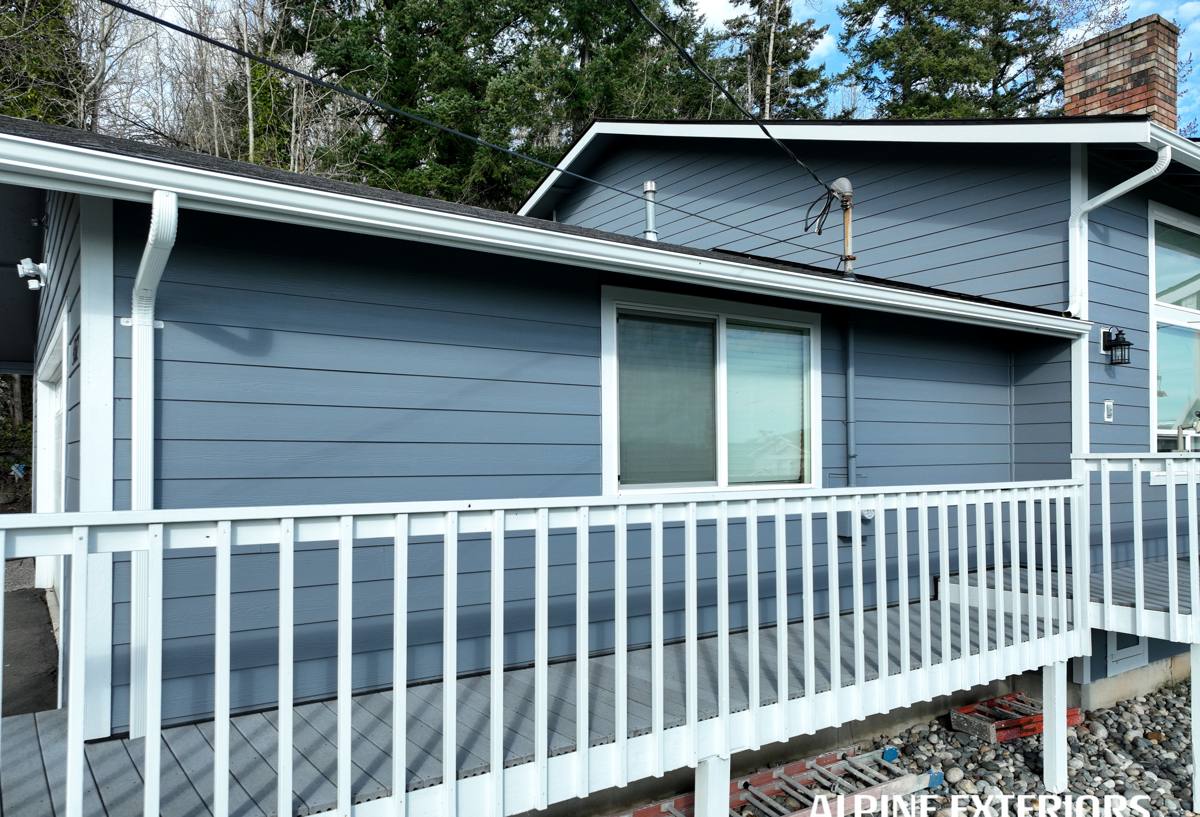
What the Salt Air and Rain Actually Do to a Roof
Salt air doesn't just affect metal railings and hardware — it accelerates the breakdown of exposed fasteners, flashing seams, and any metal roof components (vents, drip edge, valley metal) that aren't rated or coated for a marine environment. Combined with near-constant humidity and driving rain off the bay, a few specific failure points show up more often on Birch Bay roofs than on roofs further inland:
- Corrosion at exposed nail heads and staples, especially on older roofs where standard fasteners were used instead of corrosion-resistant options
- Flashing seams around chimneys, skylights, and roof-to-wall transitions that weren't sealed for wind-driven rain, not just vertical rain
- Granule loss on shingles facing prevailing wind and salt exposure, which shortens the shingle's effective lifespan
- Soft or rotted decking under valleys and eave edges where moisture sits longest
- Moss and organic growth taking hold in shaded, north-facing, or tree-covered sections of roof
None of these are exotic problems. They're the predictable result of a marine climate acting on a roof over time. The fix isn't a special product so much as a correct process that accounts for these conditions from the start.
Getting the Deck and Underlayment Right — Before Any Shingle Goes Down
Starting From the Deck Up
A shingle roof is only as good as what's underneath it. Before we install anything, we check the roof deck for soft spots, delamination, or rot — most often found at eaves, valleys, and around old flashing that's been leaking slowly for years without an obvious interior sign. In a climate like Birch Bay's, skipping this step is how a homeowner ends up paying for a new roof twice: once for the shingles, and again a few years later for the deck that was quietly rotting underneath the whole time.
Underlayment That Matches the Exposure
We use synthetic underlayment as the standard base layer, with self-adhering ice-and-water membrane in the areas that see the most water: valleys, eaves, around chimneys and skylights, and low-slope transitions. On a home with heavier wind-driven rain exposure — which describes a lot of Birch Bay properties close to the water — we extend that membrane further up the roof plane than a standard inland install would call for. It costs a bit more material and labor up front, and it's one of the cheapest ways to prevent a leak that would otherwise take years to show up and cost far more to repair.
Ventilation: The Part of the Roof Nobody Sees but Everybody Needs
Proper attic and roof ventilation matters everywhere, but it matters more in a humid coastal climate. Without balanced intake and exhaust ventilation, moisture gets trapped under the roof deck, which speeds up rot, encourages mold and mildew, and can void a shingle manufacturer's warranty outright. We check existing ventilation on every reroof — soffit vents, ridge vents, and any gable or box vents — and correct imbalances as part of the job rather than treating it as a separate upsell. A shingle roof installed over a poorly ventilated attic in this climate will underperform its rated lifespan no matter how good the shingles themselves are.
Choosing a Shingle That Makes Sense for a Marine Climate
Not every asphalt shingle product is built the same way, and in a salt-air, high-moss environment, the differences matter more than they would in a drier inland setting. We favor architectural (dimensional) shingles with algae-resistant granules over basic three-tab products for most Birch Bay homes, for reasons that come down to durability and moisture behavior rather than looks alone.
| Shingle Type | Typical Lifespan | How It Handles Birch Bay Conditions |
|---|---|---|
| 3-Tab Asphalt | 15–20 years | Lower upfront cost; thinner profile shows wear from wind and salt exposure sooner |
| Architectural (Dimensional) Asphalt | 25–30 years | Heavier mat, better wind rating, holds up better against driving rain and salt air over time |
| Algae-Resistant (AR) Granule Upgrade | Adds to base lifespan | Copper-infused granules resist the moss and algae staining common in shaded, humid coastal areas |
| Impact-Rated / Class 4 | Varies by product | Worth discussing for homes with heavy tree cover or debris exposure; not required for most Birch Bay homes |
We'll walk through the actual product lines and warranty structures available at the time of your estimate — manufacturer offerings and pricing shift, so we'd rather show you current options in person than quote you something that may not be accurate by the time you're ready to move forward.
Moss Season Is Longer Here Than Most Homeowners Expect
Whatcom County's tree cover and persistent moisture mean moss isn't a once-a-year nuisance for a lot of Birch Bay roofs — it's a near-constant maintenance item, especially on north-facing slopes and sections shaded by mature trees. Moss holds moisture directly against the shingle surface, which accelerates granule loss and, left unchecked, works its way under shingle tabs and lifts them enough for wind-driven rain to get underneath. It also adds weight and can clog valleys and gutters, backing water up under the roof edge.
During installation, we make sure valleys and eaves are detailed so water and debris move off the roof instead of collecting in low spots. After installation, moss control is mostly a matter of routine maintenance — not a one-time fix — which we cover further down.
Our Process for a Birch Bay Roof Replacement
The steps themselves aren't unusual — what changes is the attention paid to the details that matter most in this specific climate. Here's how a typical asphalt shingle reroof goes with our crew:
- Inspection and estimate: We look at the existing roof, deck condition where visible, ventilation setup, and any problem areas (valleys, flashing, moss buildup) before quoting anything.
- Tear-off: Old shingles and underlayment come off down to the deck so we can actually see what we're working with, rather than layering over hidden problems.
- Deck repair: Any soft, rotted, or delaminated decking gets replaced before anything else goes down.
- Ventilation correction: Intake and exhaust venting is checked and adjusted as needed for the home's attic setup.
- Underlayment and ice-and-water membrane: Applied with extra coverage in valleys, eaves, and high-exposure areas.
- Flashing: New flashing at chimneys, skylights, walls, and valleys, detailed for wind-driven rain rather than just vertical runoff.
- Shingle installation: Installed to manufacturer specification for proper wind rating, with corrosion-resistant fasteners.
- Cleanup and magnetic sweep: Full site cleanup, including a nail sweep of the yard and driveway.
- Walkthrough: We go over the finished roof with you before we call the job done.
Repair, Partial Replacement, or Full Reroof — How to Think About It
Not every roof problem in Birch Bay needs a full tear-off. The right call depends on the age of the roof, how widespread the damage is, and what's happening underneath the shingles.
| Situation | Likely Approach | What to Watch For |
|---|---|---|
| Isolated leak, roof under 10–12 years old | Targeted repair (flashing, localized shingles) | Confirm the deck underneath is still sound before repairing over it |
| Moss and granule loss, no active leaks | Cleaning, moss treatment, monitoring | Don't ignore heavy moss — it accelerates the timeline toward a full replacement |
| Multiple leak points or roof near end of rated lifespan | Full reroof | Patching an aging roof repeatedly often costs more over time than one correct replacement |
| Visible deck rot or sagging | Full reroof with deck repair | This is a structural issue, not a cosmetic one — don't delay |
We'll give you a straight answer on which category your roof falls into during the estimate — we're not going to sell a full reroof to a homeowner who genuinely just needs a repair, and we'll tell you plainly when a repair is just delaying an inevitable replacement.
Why It Matters That We Already Work Birch Bay
A crew that regularly works in Birch Bay and along the Whatcom County coastline already knows which details get skipped on roofs installed by contractors used to drier, inland conditions. We know to extend membrane coverage further than a standard spec sheet suggests, to spec corrosion-resistant fasteners as the default rather than an upsell, and to check ventilation as a matter of course rather than as an afterthought. We also understand the access and staging realities of working on homes close to the water — wind conditions, material protection, and scheduling around weather windows that are less predictable than they'd be a few miles inland.
That local familiarity isn't a marketing line — it shows up in fewer callbacks and roofs that actually perform to their rated lifespan instead of failing early because of details that got missed.
Keeping a New Roof Performing After Installation
An asphalt shingle roof in Birch Bay needs a little more upkeep than the same roof would inland, mostly because of moss and debris. A short annual routine goes a long way toward protecting the investment:
- Clear gutters and valleys of debris at least twice a year, more often under heavy tree cover
- Address moss growth early with appropriate treatment rather than letting it establish and spread
- Have flashing and roof penetrations (vents, chimneys, skylights) checked periodically, since these are the most common leak points
- Keep overhanging branches trimmed back to reduce shade, debris, and physical abrasion on the shingle surface
- Schedule a roof inspection after major windstorms, which are common along this stretch of coastline
None of this requires special equipment or a large budget — it's mostly a matter of not letting small issues sit long enough to become expensive ones.
Get a Straightforward Estimate
If you're dealing with an aging roof, ongoing moss problems, or you just want an honest read on where your roof stands, we're happy to take a look. The estimate is free, there's no pressure to sign anything on the spot, and you'll get a clear explanation of what we see and what we'd recommend. Use the form below to get in touch and we'll set up a time to come out.