 Bellingham Siding
 Why Columbia Roofs Take a Different Kind of Beating
Columbia is one of Bellingham's older, established neighborhoods, and that means a lot of roofs in the area have already been through several full Pacific Northwest wet seasons — some of them a few decades' worth. Whatcom County sits close enough to Bellingham Bay that homes here deal with a mix most inland roofs never see: salt-laden air off the water, long stretches of driving rain that comes in sideways during winter storms, and a moss season that can run from fall through spring. None of those things destroy a roof overnight. What they do is work on it slowly, in the seams, the flashing, and the shaded north-facing slopes, until a small weak point turns into a leak.
A roof repair done right in this neighborhood isn't just about patching the spot where water showed up on the ceiling. It's about understanding why that spot failed in the first place, given everything this climate throws at a roof, and fixing the actual cause instead of just the symptom.
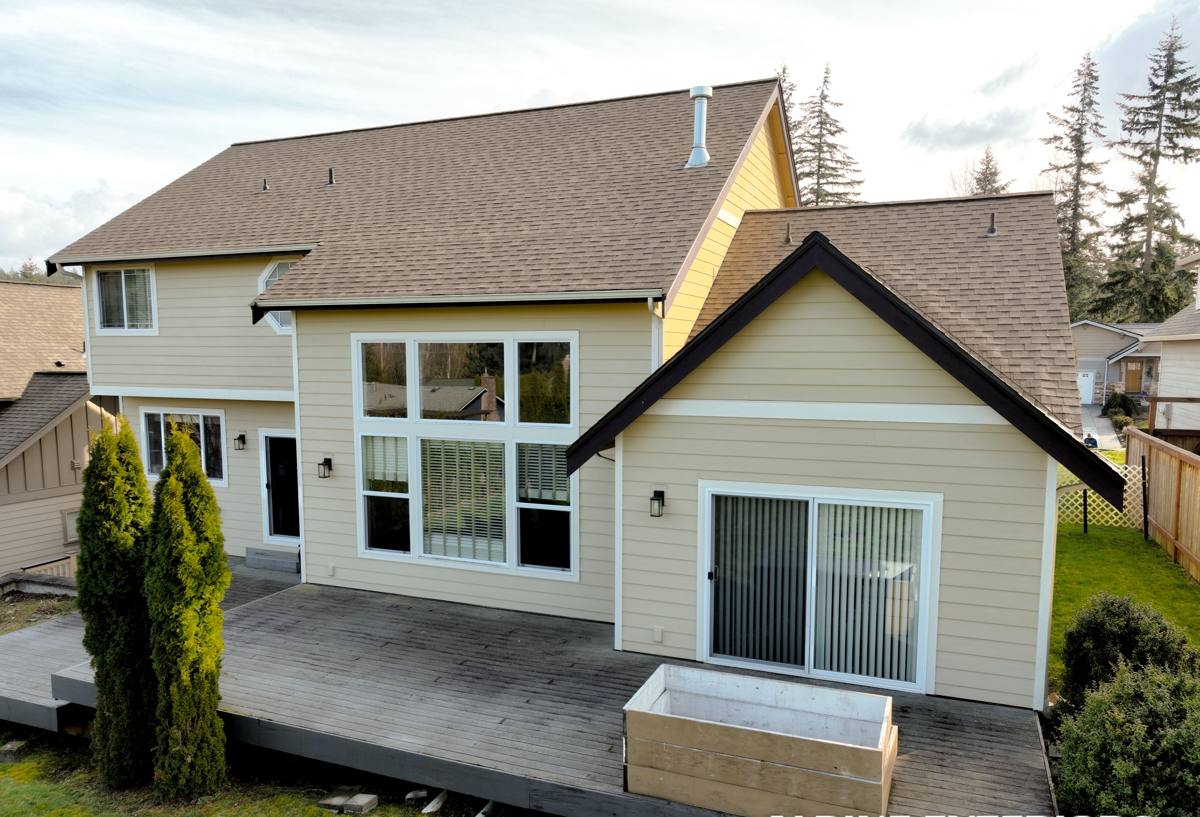
Signs Your Columbia Home Needs Roof Repair Now
Some roof problems announce themselves. Others sit quietly for a season or two before they turn into a bigger repair bill. Homeowners in this part of Bellingham should keep an eye out for:
- Water stains on interior ceilings or upper walls, especially after a heavy rain event
- Granules collecting in gutters or at the base of downspouts
- Curling, cracked, or missing shingles, particularly on slopes facing the prevailing weather
- Thick moss growth or dark streaking on shaded roof sections
- Soft or spongy spots when walking a low-slope section, which can mean the decking underneath has taken on moisture
- Daylight visible through the attic roof boards
- Flashing that looks lifted, rusted, or separated around chimneys, vents, and skylights
Any one of these on its own might be minor. Two or three together usually mean water has been finding its way past the roof surface for a while, and it's worth having someone look before the next storm system rolls in off the water.
What a Correct Roof Repair Actually Involves
A quality repair is a diagnostic process first and a materials job second. Rushing straight to "patch and go" is how the same leak reappears two winters later, usually in a slightly different spot.
Finding the Real Source
Water doesn't always leak straight down. It can travel along rafters or sheathing and show up on a ceiling several feet from where it actually entered the roof. A proper repair starts by tracing the path — checking flashing, valleys, penetrations, and the roofing material itself — before any work begins.
Flashing and Transitions
The majority of roof leaks we deal with in this area trace back to flashing, not the field of the roof itself. Chimneys, skylights, vent pipes, and roof-to-wall transitions are where two different materials meet, and that's where driving rain finds its way in if the flashing has corroded, pulled loose, or was installed with the wrong overlap in the first place. Repairing flashing correctly means re-bedding or replacing it with proper step and counter-flashing, not just running a bead of sealant over the gap.
Underlayment and Decking
If water has been getting under the shingles for any length of time, the underlayment and the wood decking beneath it need to be checked, not assumed to be fine. Soft or delaminated decking has to be cut out and replaced — patching shingles over compromised decking just hides a structural problem under a cosmetic fix.
Shingle and Material Matching
For a section repair to blend in and perform correctly, the replacement material needs to match the existing roof's type, profile, and where possible, color and age-weathering. Mismatched shingles aren't just a cosmetic issue — different products can have different exposure and nailing patterns, which affects how well the patch sheds water.
Moss, Moisture, and the Long Bellingham Wet Season
Moss deserves its own section because it's one of the most common — and most misunderstood — roof problems we see in Whatcom County. Moss doesn't just look bad. As it grows, it holds moisture directly against the roofing material, and its root structure works into shingle granules and seams over time, which shortens the life of the roof surface underneath it. On shaded, north-facing slopes that never fully dry out between rains, moss can establish itself within a couple of seasons if it isn't kept in check.
A repair-focused visit isn't a substitute for regular moss maintenance, but if moss has already caused granule loss or lifted shingle edges in a specific area, that section needs to be treated as part of the repair — cleared correctly (not pressure-washed, which can strip granules and force water under shingles), treated to slow regrowth, and inspected for damage underneath before it's called finished.
Driving Rain and Wind-Driven Water
Storms off the Strait and the Sound don't just drop rain straight down — wind pushes it sideways and up under shingle edges, laps, and exposed fasteners. Repairs on exposed or higher-elevation sections of a roof need extra attention to lap length and fastening, since a repair that would hold fine on a sheltered slope can still leak under wind-driven rain if it's done to a lower standard.
Repair vs. Replacement — How We Help You Decide
Not every roof problem calls for a repair, and not every roof problem calls for full replacement. We look at the whole roof, not just the leak, before recommending either.
| Factor | Leans Toward Repair | Leans Toward Replacement |
|---|---|---|
| Roof age | Under roughly 15-20 years, within typical shingle service life | Nearing or past the material's expected lifespan |
| Extent of damage | Isolated to one section, flashing point, or slope | Multiple slopes affected, or decking damage in several areas |
| Underlying decking | Solid, dry, no soft spots found | Widespread soft or delaminated decking |
| Prior repair history | First or infrequent repair | Repeated repairs to the same or nearby areas |
| Overall material condition | Granule loss and moss limited to affected area | Uniform wear, brittleness, or moss coverage across the whole roof |
When a repair is the honest recommendation, we tell you that. When the roof has enough age and wear that another repair is just delaying an inevitable full replacement, we'll say that too, along with why — this climate makes it easy to spend repair money on a roof that's already near the end of its useful life.
Our Repair Process, Start to Finish
- Inspection and diagnosis — We get on the roof (weather permitting) and in the attic if needed, to find the actual source of the problem rather than just the visible symptom.
- Written assessment — You get a clear explanation of what's causing the issue, what it will take to fix it correctly, and an honest repair-versus-replace opinion if it's a close call.
- Scope and estimate — A specific plan for the repair area, materials needed, and price, before any work starts.
- The repair itself — Removing and replacing damaged flashing, decking, or roofing material as needed, matched to the existing roof where possible.
- Cleanup and gutter check — Debris and old material removed, gutters and downspouts checked for granule buildup or blockages that could affect roof drainage.
- Final walk-through — We show you the completed work and explain anything you should keep an eye on going forward.
Materials and Methods We Use
Most Columbia-area homes are roofed in asphalt composition shingle, with some cedar shake and metal roofing mixed in on older or renovated properties. Repair methods differ by material:
Asphalt Composition Shingle
The most common repair type. Success depends on proper shingle matching, correct nail placement above the sealant strip, and flashing integration — not just sealing over a visible gap.
Cedar Shake
Cedar repairs require splitting in replacement shakes rather than simply nailing on new ones flush, so water continues to shed correctly across the course. Cedar in this climate also needs attention to ventilation behind the repair, since trapped moisture is what shortens cedar's lifespan fastest.
Metal Roofing
Metal repairs are almost always about fastener backout, seam separation, or flashing at penetrations rather than the panels themselves failing. These repairs call for matching fastener type and proper sealant compatible with the metal coating, not a generic caulk.
Why a Crew That Already Works in Columbia Matters
A roofing crew that regularly works in this part of Bellingham already knows how the local weather patterns behave on specific roof orientations, which slopes hold moss longest, and how Whatcom County's wet season timing affects when repairs should be scheduled versus when it's better to wait for a dry stretch. That local pattern recognition shortens the diagnostic part of the job and reduces the odds of a repair getting done, then failing again once the next round of driving rain tests it.
Being local also means being reachable. If a repair doesn't hold the way it should, or a new issue shows up nearby after a storm, you're calling a crew that's a short drive away and already has your roof's history — not starting over with someone new.
After the Repair — Keeping It From Happening Again
A good repair should hold, but a little seasonal attention goes a long way in this climate. We recommend:
- Clearing gutters and downspouts at least twice a year, more often under overhanging trees
- Scheduling moss treatment before it gets thick enough to lift shingle edges, not after
- Trimming back branches that keep a section of roof shaded and slow to dry
- Doing a visual check of flashing and roof penetrations after any major windstorm
- Having the roof looked at professionally every couple of years, even with no visible problems
None of this replaces a proper inspection if something looks or feels off — but it does reduce how often you need one.
Get an Honest Look at Your Roof
If you're dealing with a leak, moss buildup, or a roof section that's just been bothering you for a while, we're happy to come take a look. The estimate is free, there's no pressure to commit to anything beyond what your roof actually needs, and you'll get a straight answer about whether it's a repair or something bigger. Fill out the form below to get started.