 Bellingham Siding
 Why Fairhaven's Coastal Climate Is Hard on Roofs
Fairhaven sits close to Bellingham Bay, and that proximity to the water shapes what a roof in this neighborhood has to deal with every year. Salt-laden air, wind-driven rain that comes off the water sideways instead of straight down, and a wet season that stretches long enough to grow a thick coat of moss on anything shaded and damp — none of these are dramatic on their own, but stacked together year after year, they wear out a roofing system faster than the "20-year" or "30-year" number on the shingle bag would suggest.
Salt air is corrosive to exposed metal — fasteners, flashing, gutter hangers, vent caps — and over time it also accelerates the breakdown of asphalt shingle granules. Driving rain doesn't just test how well a roof sheds water straight down; it tests whether the laps, ridge caps, and flashing details can resist water being pushed sideways and even slightly upward during a real winter storm. And moss, once it takes hold, holds moisture against the roof surface almost continuously, which is exactly the condition that rots decking and shortens the life of any roofing material sitting on top of it.
None of this means Fairhaven homes need exotic materials or unusual construction methods. It means the installation has to be planned around this specific climate — the right underlayment, the right attic ventilation, the right flashing details at every transition — instead of being treated like a generic reroof copied from a drier part of the state.
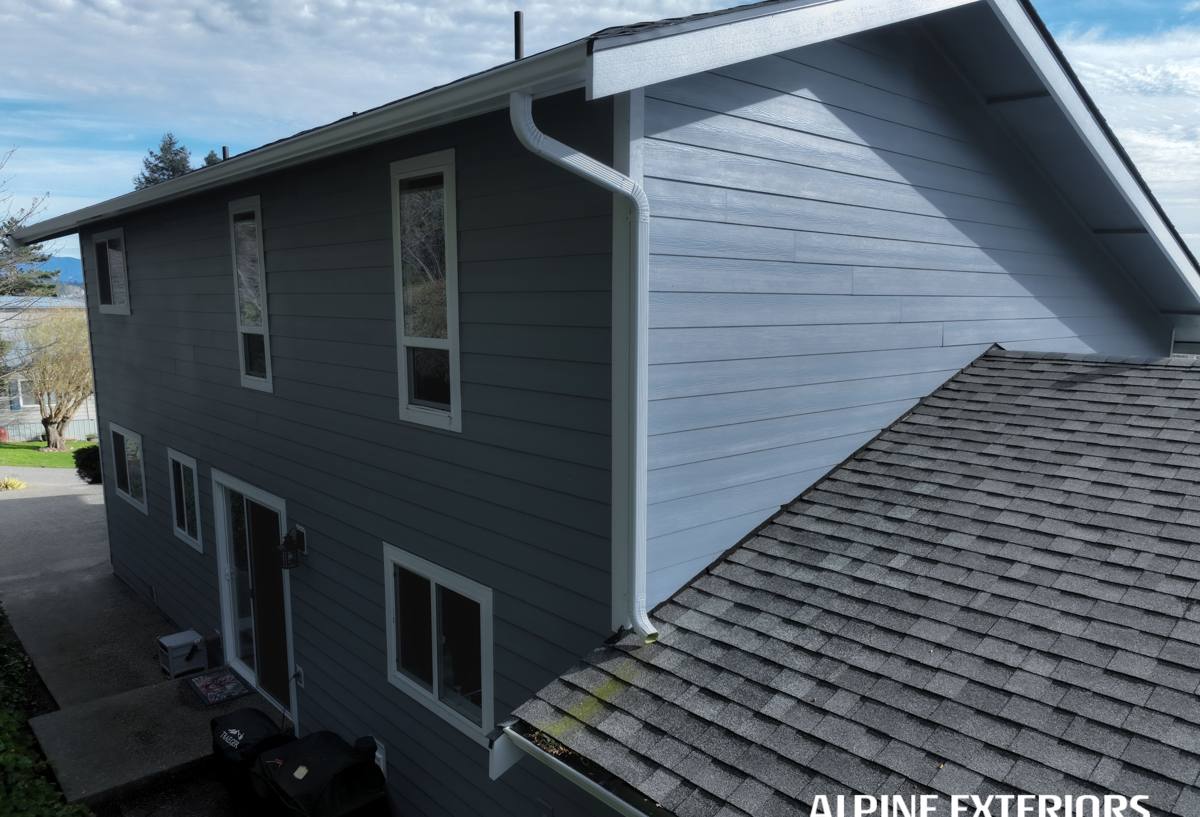
What a Correct Installation Actually Involves
A new roof is only as good as what happens before the first course of shingles or panels ever goes down. Most roof failures we get called out to inspect in this area trace back to shortcuts taken at this stage, not to the material itself.
Tear-off and deck inspection
We remove the old roofing down to the deck rather than installing over it. That's the only way to actually see the plywood or plank sheathing underneath, which is where moss-related and rain-related damage tends to hide. Soft spots, delamination, and rot around old flashing points get replaced before anything new goes on. Covering that kind of damage with a fresh layer of shingles doesn't fix it — it just hides it until it fails again, usually as a leak inside the house.
Underlayment and ice-and-water shield
Given how much wind-driven rain Fairhaven roofs see, the underlayment layer matters more here than in a lot of other climates. We use a synthetic underlayment as the primary water-resistant barrier, with self-adhering ice-and-water shield membrane at the eaves, valleys, and around every roof penetration — chimneys, vent pipes, skylights — where wind-driven water is most likely to force its way under the roofing material.
Flashing at every transition
Flashing is where roofs actually leak, far more often than the field of the roof itself. Every place the roof plane changes — valleys, sidewalls, chimneys, dormers, skylights — gets new metal flashing, properly lapped and sealed, not just tucked under the old flashing to save time. In a salt-air environment we also pay attention to the flashing material itself, since not every metal ages the same way this close to the water.
Choosing the Right Material for This Climate
There's no single "best" roofing material for every home — it depends on the roof's pitch, the home's style, and what the homeowner wants to maintain over time. But some materials handle Fairhaven's combination of salt air, rain, and moss pressure better than others, and it's worth understanding the trade-offs before deciding.
| Material | Moss and moisture resistance | Salt air durability | Typical lifespan |
|---|---|---|---|
| Architectural asphalt shingle | Good with proper ventilation; algae-resistant granules help control staining | Solid; use corrosion-resistant fasteners and flashing | 25–30 years |
| Standing seam metal | Excellent — steep, smooth surface sheds moisture and discourages moss | Very good with a marine-grade or coated finish; fasteners are the weak point if not corrosion-rated | 40–50+ years |
| Synthetic/composite shingle | Good; won't absorb moisture like wood alternatives can | Good; check manufacturer warranty terms for coastal exposure | 30–50 years, product-dependent |
We don't install wood shake roofing in this climate as a standard practice. It's a maintenance-heavy product in a wet, moss-prone environment — it needs regular treatment and cleaning to hold up, and even then it's more susceptible to moisture retention and rot than the alternatives above. That's a trade-off we're upfront about rather than a knock on the product itself; it simply isn't the right match for Fairhaven's rain and humidity pattern without a much higher maintenance commitment than most homeowners want to take on.
Ventilation and Moisture Control
A new roof's biggest enemy in this climate often isn't rain hitting the outside — it's moisture trapped underneath, in the attic, with nowhere to go. Warm, damp air rising from the living space condenses against a cold roof deck in winter, and without adequate intake and exhaust ventilation, that moisture sits against the underside of the sheathing. Over time it causes rot, encourages mold, and can shorten the life of the roofing material from below, even while the top side looks fine.
We calculate ventilation based on the attic's square footage and balance intake (soffit vents) against exhaust (ridge vents or other exhaust points), rather than just adding vents wherever it's convenient. Balanced ventilation also helps regulate attic temperature in summer, which protects shingles from premature aging and helps keep energy costs down. On a home with poor or blocked ventilation, we'll flag it before the reroof — it's far cheaper to correct at installation than to diagnose later as a mystery leak or a musty attic smell.
Our New Roof Installation Process
- Inspection and estimate. We walk the roof, check the attic from the inside where accessible, and note the roof's pitch, penetrations, and any problem areas before quoting anything.
- Material selection. We go over the options above in plain terms — cost, appearance, and how each holds up to salt air, rain, and moss — so the choice fits the home and the budget, not just what's easiest to install.
- Permitting. We handle the City of Bellingham permit and schedule required inspections so the homeowner doesn't have to chase paperwork.
- Tear-off and deck repair. Old roofing comes off, the deck is inspected, and any damaged sheathing is replaced before moving forward.
- Underlayment and flashing. Synthetic underlayment, ice-and-water shield at vulnerable points, and new flashing at every transition, as described above.
- Roofing installation. The chosen material goes down to manufacturer specifications, with attention to fastener type and spacing appropriate for coastal wind exposure.
- Ventilation tie-in. Ridge vents, soffit vents, or other ventilation components are installed and balanced as part of the system, not treated as an afterthought.
- Cleanup and final walkthrough. Job site is cleaned, including a magnetic sweep for stray nails, and we walk the finished roof with the homeowner before calling it done.
What to Expect During the Project
Timeline
Most single-family roof replacements in the Fairhaven area take one to three days once work begins, depending on roof size, pitch, and how much deck repair turns up once the old material is off. Weather is the main variable — we schedule around Whatcom County's wet stretches where we can, since roofing shouldn't be installed over a damp deck, but rain delays are a normal part of working in this region and we'll communicate any schedule shifts as they come up.
Permits and inspections
New roof installations typically require a building permit and may involve an inspection, depending on scope. We handle the application and scheduling as part of the job so it isn't something the homeowner has to manage separately.
Why Local Fairhaven Experience Matters
A crew that only occasionally works this close to the water treats every job as a generic install. A crew that regularly works in Fairhaven and along Bellingham Bay already knows which flashing details tend to fail first in salt air, which fastener grades hold up and which corrode early, and how aggressive the moss growth gets on north-facing and shaded roof sections in this specific microclimate. That familiarity shows up in fewer callbacks and a roof that's built for the conditions it will actually face, not just the conditions on a spec sheet written for a drier part of the state.
Local experience also means knowing the practical side: Whatcom County's permitting process, realistic scheduling around the region's wet season, and how to sequence a tear-off so an open roof deck isn't left exposed to a rain system that rolled in earlier than forecast. These aren't things a crew can fully learn from a manual — they come from doing this work in this specific place, repeatedly.
Protecting Your New Roof: Maintenance and Cost Factors
Maintenance checklist
A correctly installed roof still needs basic upkeep to reach its full lifespan in this climate. A simple annual routine goes a long way:
- Keep gutters and downspouts clear so water isn't backing up under the eaves during heavy rain
- Watch for moss on shaded or north-facing slopes and address it early, before it spreads or thickens
- Trim back overhanging branches that keep sections of the roof damp and shaded longer than the rest
- Have flashing around chimneys, vents, and skylights checked periodically, since these are the most common leak points over time
- After major windstorms, do a visual check (from the ground, or have it inspected) for lifted or missing shingles or panels
Cost factors
Every roof is priced individually, but the main factors that move the number are consistent. We walk through all of these during the estimate so there are no surprises once the work starts.
| Factor | Why it affects cost |
|---|---|
| Roof size and pitch | Steeper roofs take longer to work safely and use more material per square foot of coverage |
| Material choice | Asphalt, metal, and composite options have different material and labor costs, as shown above |
| Deck condition | Rotted or delaminated sheathing found during tear-off adds repair cost, but skipping it isn't a real option |
| Number of penetrations | Chimneys, skylights, and multiple vents each need individual flashing work |
| Ventilation upgrades | Adding or rebalancing intake and exhaust ventilation is a smaller add-on cost that protects the whole system |
If you're planning a new roof for a home in Fairhaven or elsewhere in the Bellingham area, we're happy to walk the roof, answer questions honestly, and put together a free, no-pressure estimate using the form below.