 Bellingham Siding
 Siding Installation in York, Bellingham
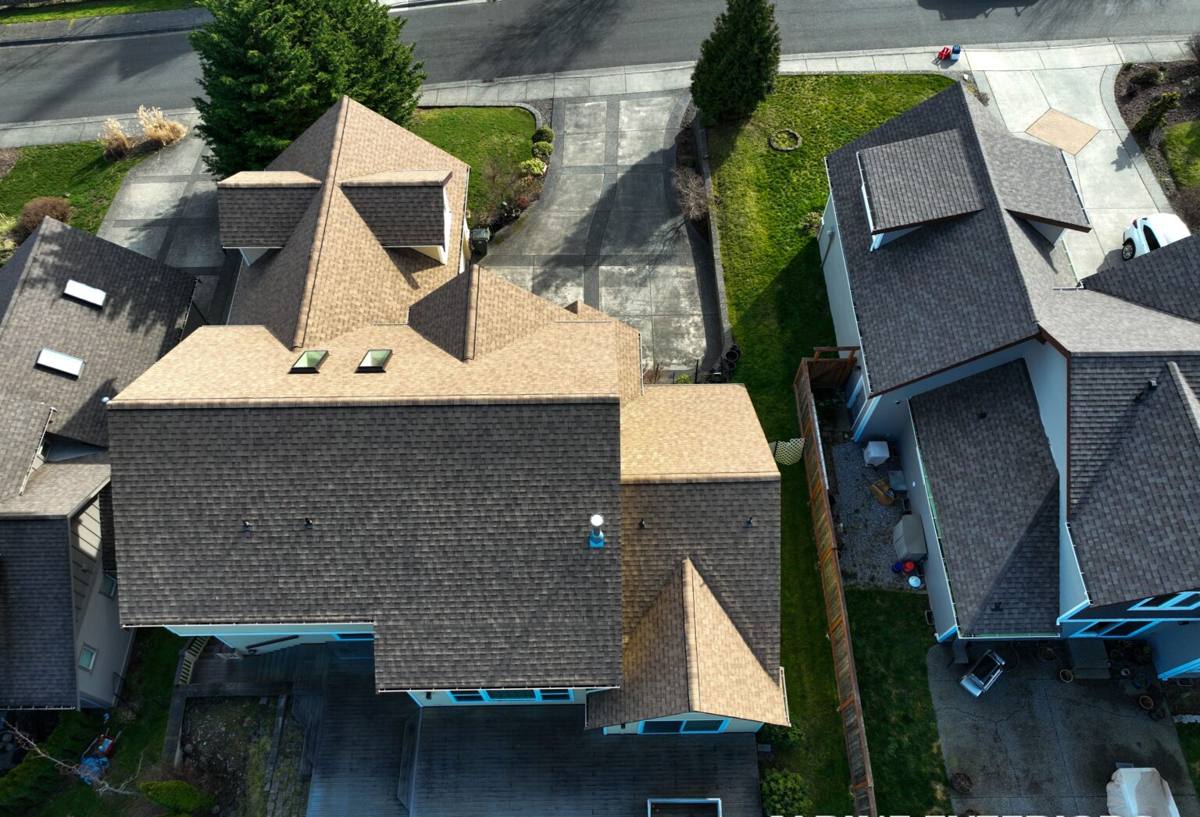
York is one of Bellingham's older, well-established neighborhoods, with a housing stock that spans decades of construction styles sitting close enough to Bellingham Bay to feel the marine air on a daily basis. Homes here weren't built with today's siding technology, and many are due for a re-side simply because their original siding has reached the end of what it can reasonably protect against. When we install siding in York, we're not applying a generic product to a generic house — we're accounting for a specific mix of salt-laden air, near-constant winter rain, and a moss season that runs longer here than it does in drier parts of the state.
This page focuses specifically on siding installation for York homes: what the local climate does to exterior walls over time, what a correctly executed installation actually requires, and how our process is built around the realities of this neighborhood rather than a one-size-fits-all approach.
What Whatcom County's Climate Does to Siding
Bellingham sits on Bellingham Bay in Whatcom County, and that proximity to saltwater matters more than most homeowners realize. Salt air is corrosive to exposed metal fasteners, flashing, and trim, and it accelerates the breakdown of coatings and finishes that aren't formulated to resist it. Combine that with the region's driving rain — wind-blown precipitation that hits walls at an angle rather than falling straight down — and siding is under near-constant pressure to shed water rather than absorb it.
Then there's moss. Whatcom County's mild, wet winters create a moss and algae season that can stretch across most of the year on shaded, north-facing, or tree-covered walls — common conditions in a mature neighborhood like York. Moss holds moisture against a wall surface long after rain has stopped, and on materials that aren't dimensionally stable or properly finished, that sustained dampness is where problems start: swelling, delamination, coating failure, and eventually rot in the sheathing behind the siding.
None of this means siding is doomed in York. It means the material, the installation details, and the ongoing maintenance plan all have to be chosen with these specific conditions in mind — not conditions from a drier or less coastal climate.
Why Older York Homes Are Especially Exposed
Many homes in this part of Bellingham were built before modern water-resistive barriers and flashing details were standard practice. Original siding may have been holding on through sheer age and thickness rather than good water management underneath. When that siding finally fails, it's common to find that the real damage isn't the visible siding at all — it's what's been happening behind it, unnoticed, for years.
What a Correct Siding Installation Actually Involves
Siding is a system, not a single product. A wall that sheds water correctly in a climate like ours depends on several layers working together, and skipping or rushing any one of them is where premature failures come from.
- Water-resistive barrier: A continuous, properly lapped house wrap or building paper behind the siding, installed so every seam sheds water downward and outward.
- Flashing at every penetration: Windows, doors, hose bibs, light fixtures, and vents all need integrated flashing so water is directed out and away, not behind the cladding.
- Rainscreen or proper clearance: A gap or drainage plane behind the siding lets any moisture that does get in dry out instead of sitting against the wall.
- Correct fastening: Fastener type, spacing, and depth matter — over-driven or under-driven nails are one of the most common causes of early siding problems.
- Ground and roofline clearance: Siding installed too close to grade, decks, or roof lines invites splash-back moisture and debris that holds dampness against the material.
- Sealed and caulked joints where specified: Not every seam should be caulked — knowing which joints need sealant and which need to breathe is part of doing this correctly.
Any siding product, installed without attention to these details, will underperform in this climate. This is why we treat installation quality as at least as important as the material choice itself.
Why We Install Only James Hardie Fiber Cement
We standardized on James Hardie fiber cement siding, and we don't install vinyl, LP SmartSide, or cedar. That's a deliberate professional standard, not a marketing position, and it's worth explaining briefly here since it directly affects what a "correct" installation in York looks like.
Vinyl siding is inexpensive and low-maintenance in the sense that it doesn't need painting, but it's a thin, flexible material that can warp in temperature swings and shows its seams and fastening more visibly over time — and it doesn't resist impact or wind-driven rain intrusion the way a rigid material does. Engineered wood products like LP SmartSide perform well when installation and maintenance are followed to the letter, but they're wood-based, and wood-based products are inherently more sensitive to sustained moisture exposure — exactly the condition our moss season creates. Cedar is a beautiful, traditional material, but it requires ongoing sealing, staining, and vigilance against moisture and insects that most homeowners underestimate when they choose it, and in a marine climate that maintenance burden only grows.
James Hardie fiber cement is non-combustible, dimensionally stable in wet-dry cycling, and finished with the ColorPlus factory baked-on coating system, which resists fading and holds up better against the kind of moisture cycling that salt air and long wet seasons create. Hardie's HZ product lines are engineered specifically for climate zones like ours, and the product carries a strong transferable warranty when installed to manufacturer specification — which is exactly why correct installation detail matters as much as the material itself.
How Different Siding Materials Hold Up in Bellingham Conditions
| Factor | Vinyl | Engineered Wood (LP SmartSide) | Cedar | James Hardie Fiber Cement |
|---|---|---|---|---|
| Moisture/moss resistance | Moderate; can trap moisture behind panels | Sensitive; relies on intact coating | Low without diligent maintenance | High; won't rot or swell from moisture |
| Salt air / coastal exposure | Can become brittle over time | Coating and edges vulnerable | Weathers and grays without sealing | Factory finish engineered for coastal cycling |
| Maintenance needs | Low, but limited repair options | Periodic caulking and repainting | Regular staining/sealing required | Minimal; occasional wash and inspection |
| Fire resistance | Melts/deforms under heat | Combustible | Combustible | Non-combustible |
| Typical lifespan when installed correctly | 20-30 years | 20-30 years with maintenance | 20-30 years with heavy upkeep | 30-50+ years |
This isn't a claim that other materials can't function — plenty of homes have vinyl, engineered wood, or cedar siding performing adequately. It's an explanation of why, given what York's climate does to a wall over decades, we've chosen to put only one material on the homes we work on.
Our Installation Process
Every siding installation starts with an on-site inspection, not a phone quote. We look at the current siding condition, check for signs of hidden moisture damage, evaluate flashing and water management around windows and rooflines, and assess how sun, shade, and tree cover affect each side of the house — a north wall shaded by mature trees, common in York, needs different attention than a south-facing wall that dries out quickly.
What Happens Once Work Begins
- Removal of existing siding and inspection of the sheathing underneath for rot or damage that needs repair before new material goes on.
- Installation or repair of the water-resistive barrier, with proper lapping and sealing at every seam.
- Flashing installed or verified at every window, door, and penetration point.
- James Hardie panels or lap siding installed to manufacturer fastening and clearance specifications, including proper gap at grade and rooflines.
- Trim, caulking at specified joints, and final detail work.
- Final walkthrough so you understand what was done and what maintenance, if any, to expect going forward.
We don't treat any of these steps as optional shortcuts, because in a wet marine climate, the step that gets skipped is usually the one that causes the problem five years later.
Why a Crew That Already Works in York Matters
A contractor who regularly works in this part of Bellingham already understands things a crew from outside the area has to learn on your project: how shaded lots hold moisture longer, which wall orientations need extra attention to moss and algae, how older Whatcom County homes were typically framed and wrapped, and what permitting and inspection expectations look like locally. That familiarity shows up in fewer surprises during the job and a longer-lasting result once it's done.
Signs Your York Home May Need New Siding
- Persistent moss or algae staining that returns quickly after cleaning
- Soft or spongy spots when you press on the siding
- Visible warping, buckling, or gaps at seams and corners
- Paint that keeps failing faster than it should, even after prep and repainting
- Rising energy bills that suggest heat or moisture is getting through the wall assembly
- Visible rot at the base of walls, near decks, or around window and door trim
Any one of these on its own isn't necessarily an emergency, but a few of them together are a good reason to have the siding — and what's behind it — properly assessed.
Maintenance After Installation
Fiber cement siding is low-maintenance, not no-maintenance. A yearly rinse to keep moss and organic buildup from taking hold, a visual check of caulked joints, and prompt attention to any landscaping that's grown up against the wall will keep a correctly installed Hardie system performing for decades in this climate. We're happy to walk through what that looks like for your specific home and its sun and shade exposure.
If you're weighing a siding project for your York home, we're glad to take a look and give you a straightforward, no-pressure assessment of what your siding actually needs — free of charge, with no obligation to move forward. Use the form below to get started.